


How do lithium battery cathode materials affect energy density
Release time:
2026-07-16
Energy density is a core indicator of a lithium battery's energy storage capacity, typically referring to the electrical energy stored per unit mass or volume. As the primary "source" of lithium ions, lithium battery cathode materials largely determine the battery's energy ceiling, thus having a crucial impact on overall performance.
The specific capacity of lithium battery cathode materials determines the theoretical energy ceiling. Different materials have different reversible lithium intercalation capabilities. For example, lithium iron phosphate (LFP) has a theoretical specific capacity of approximately 170 mAh/g, while high-nickel ternary materials (NCM811) can reach over 200 mAh/g. Higher specific capacity means more lithium ions can participate in the reaction for the same mass, thus increasing energy density.
Operating voltage directly affects output energy. Energy density depends not only on capacity but also closely on voltage. Ternary materials typically have an average operating voltage of 3.6–3.8V, while lithium iron phosphate is around 3.2V. Higher voltage results in greater output energy for the same capacity, therefore, high-voltage materials are more beneficial for improving overall energy density.
Furthermore, the structural stability of the material affects the effective capacity utilization rate. Layered structures (such as NCM and NCA) typically exhibit higher lithium-ion diffusion efficiency, allowing more active lithium to participate in the reaction. While olivine structures (such as LFP) offer greater stability, their lower electronic and ionic conductivity necessitates improvements through methods like carbon coating; otherwise, they limit actual energy output.
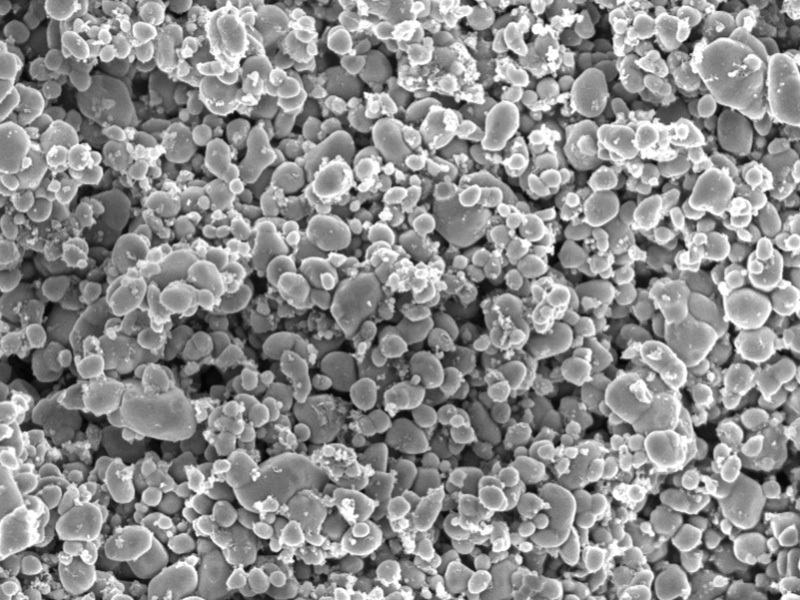
Particle morphology and material purity also affect energy density. Uniform particle distribution reduces polarization and improves charge/discharge efficiency; impurities or defects reduce active lithium utilization, thus lowering actual energy density.
The trend towards higher nickel and lower cobalt content is driving energy density improvements. Increasing nickel content significantly enhances reversible capacity but also reduces structural stability, requiring a balance through doping and surface coating techniques.
The energy density of lithium battery cathode materials is determined by three core factors: specific capacity, operating voltage, and structural utilization. In the future, with continuous optimization of material systems, lithium batteries will evolve towards higher energy density and greater safety.
Previous page
Latest News

HOW CAN WE HELP ?
Get In Touch With Us!
Copyright © 2024 Changzhou Liyuan New Energy Technology Co., Ltd. All Rights Reserved. SEO
Related Link: